Subfloor Movement: The Hidden Problem
Tiles are rigid and depend on the subfloor for support. When subfloors bend or shift, the tile and grout usually don’t flex with them. Rather, the result is broken bonds and loose tiles.
Joists spaced too far apart, not enough thickness of underlayment, or structural issues with the floor framing all create the ‘flex issue’ that tiles simply can't tolerate.
It’s not just a matter of installation. Water damage to subfloors presents another problem. When plywood or OSB subfloors absorb moisture, they swell. When they dry, they shrink. That cycle of expansion and contraction eventually breaks the adhesive bond and pops tiles loose.
Impact and Heavy Loads
Dropping heavy objects on tile floors can damage tiling. Even if there’s no visible surface damage, that accident may break the adhesive bond underneath. It looks fine but rocks when stepped on.
Concentrated loads can also cause problems. Heavy furniture on small feet or equipment that pushes the tile’s limits can stress adhesive bonds beyond their capacity.
Prevention Strategies That Actually Work
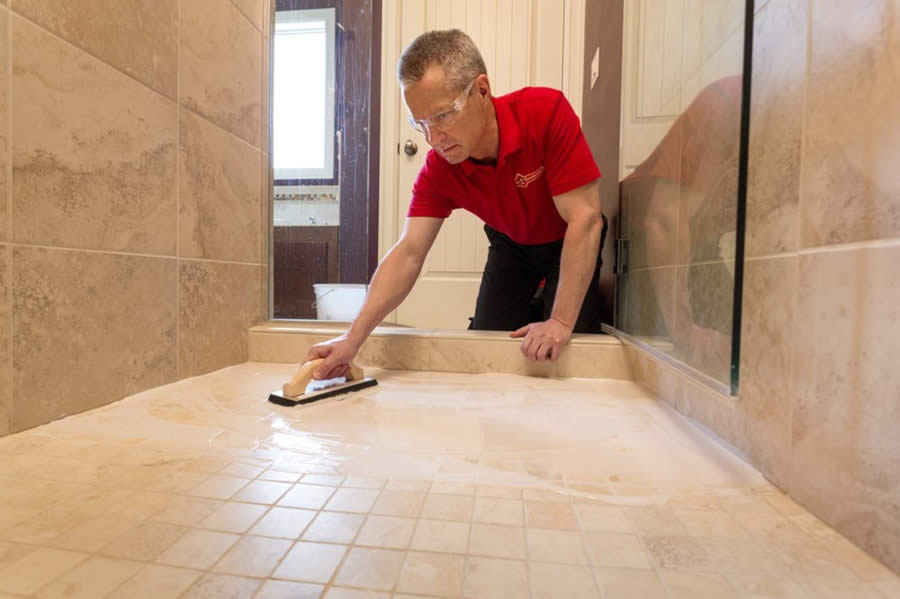
The best prevention happens during installation. Professional handymen and floor installers like the ones at Mr. Handyman understand that success is in the details.
Evaluating the subfloor, selecting the right adhesive, mixing and applying the adhesive, and giving it enough time to cure are all essentials that can be the difference between flooring that last decades and tiles that wobble in a year or two.
Beyond installation, it’s crucial that you keep up with maintenance. Regularly inspect the grout between the tiles and address cracks and gaps before water can make its way through to the subfloors.
Of course, use caution when moving or placing heavy objects over tile flooring. Furniture pads, for instance, help distribute weight and protect tile surfaces.
Let’s Keep Your Tile Floors Solid
Loose tiles are preventable, but if the damage is done, then arrange tile repair sooner rather than later. If you’re in the area, then call or message Mr. Handyman to hire a uniformed professional today.
When you choose us, you’re not just getting an experienced and background-checked handyman on the job, you’re getting a 1-year workmanship guarantee. We look forward to earning your trust.