Cracks also change how weight distributes across the step. Instead of spreading evenly, pressure concentrates around the damaged area. That stress can accelerate failure… especially in high-traffic homes.
Uneven Steps Disrupt Balance
Building codes require stairs to maintain consistent height and depth for good reason. Even small variations can increase fall risk. After all, when one step sits higher or lower than the others, it interrupts your stride.
Think about it: Your foot lifts to clear what it assumes is a standard riser height. It’s muscle memory. If the step is taller, your toe may catch. If it’s shorter, your foot may come down too soon and throw off your balance.
These inconsistencies are especially dangerous for children, older adults, and anyone carrying items. Add poor lighting into the mix and the risk multiplies.
The Compounding Risk Factors
Damaged stairs don't exist in isolation. Multiple risk factors often combine to create especially dangerous conditions:
- Poor Lighting: Stairs in dimly lit areas hide damage that would be obvious in good light. Cracks become invisible, unevenness can't be seen, and loose treads aren't noticeable.
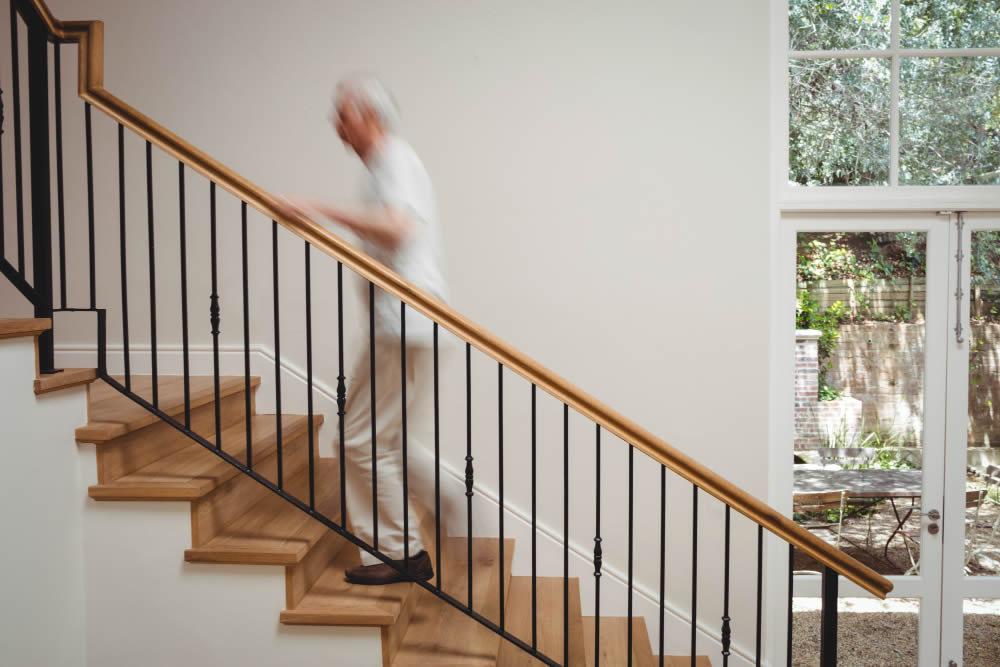
- Inadequate Railing: When stairs are damaged AND railings are loose or missing, people have nothing to grab when balance fails.
- High Traffic: Stairs that see heavy daily usage develop damage faster and pose risks to more people. It’s simple math that’s worth repeating.
Humidity, temperature shifts, and neglect can accelerate deterioration. Professional stair repair addresses the root cause before the problem escalates.
Don't Wait for an Accident
Damaged stairs represent one of the most dangerous conditions in any property. The potential consequences (broken bones, head injuries, spinal damage, or worse) far outweigh the cost and inconvenience of hiring a handyman.
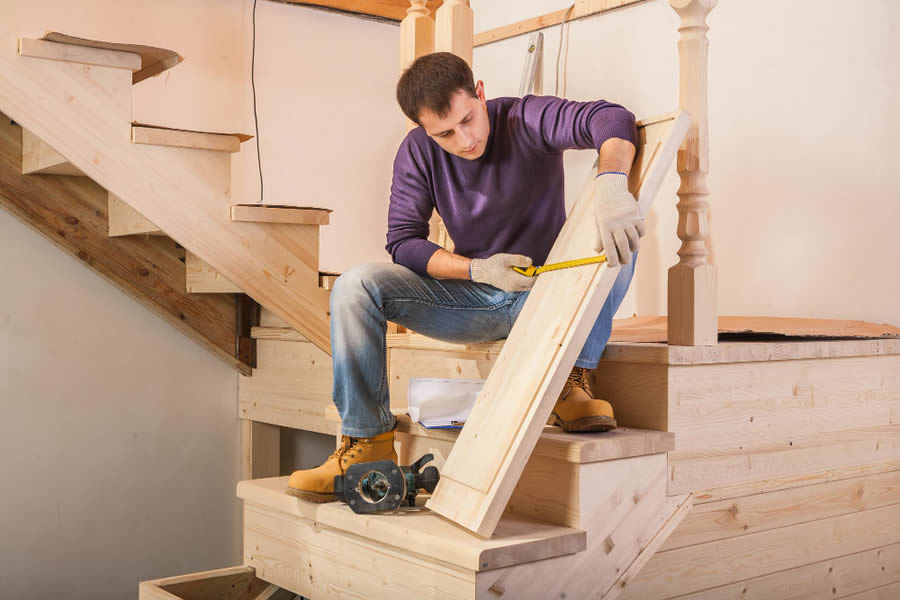
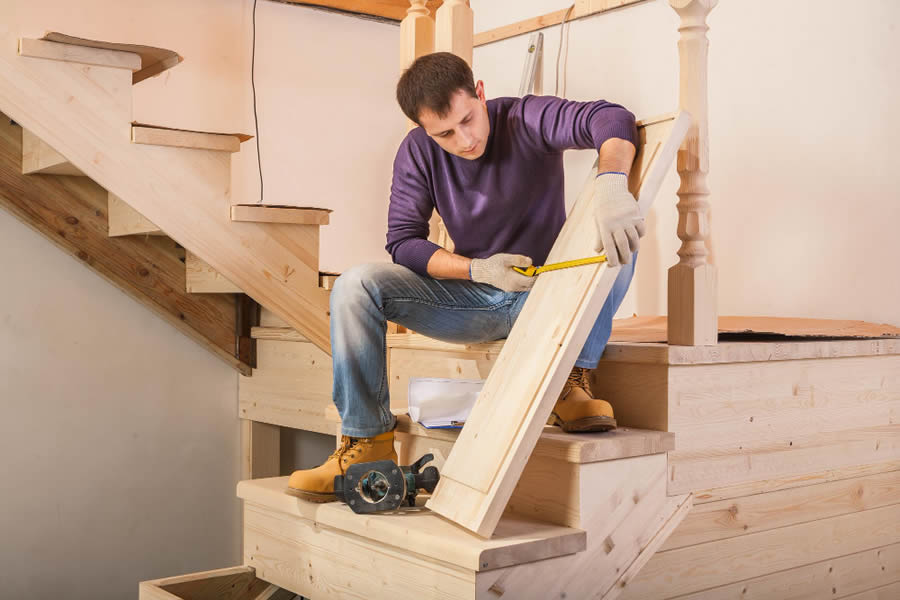
If stairs in your property show any signs of looseness, cracking, or unevenness, then contact Mr. Handyman sooner rather than later. Our handymen can assess structural integrity, identify damage and underlying causes, implement repairs, and make sure the work meets building codes.